
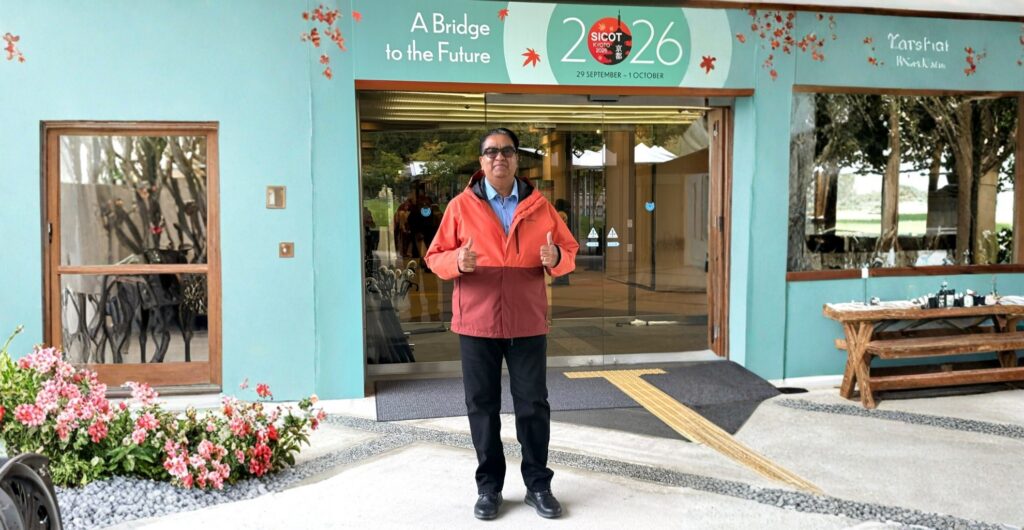
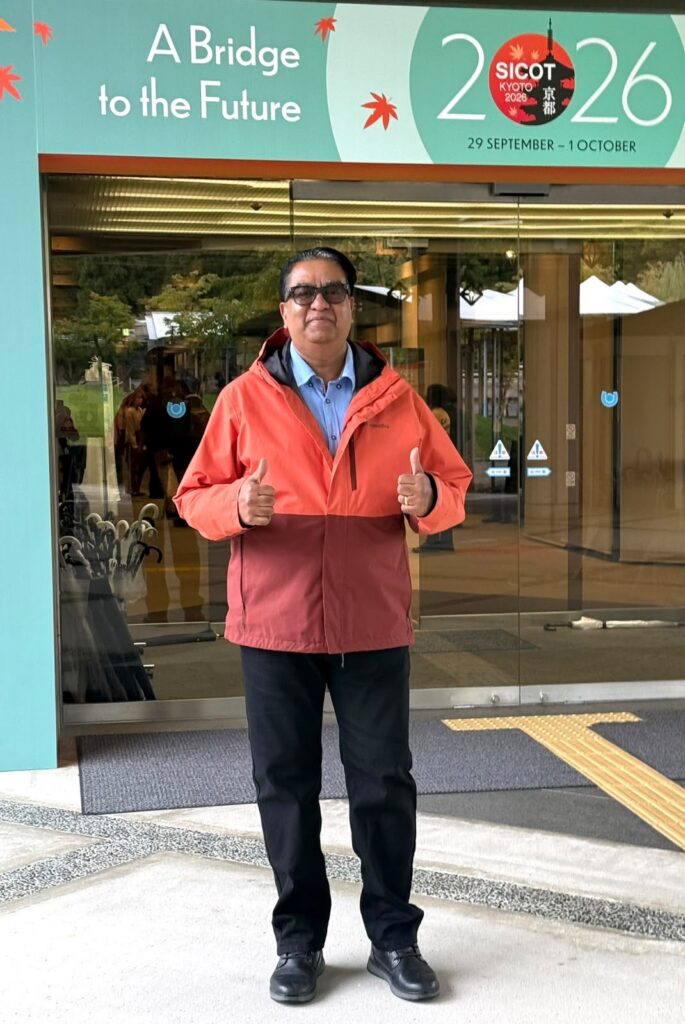
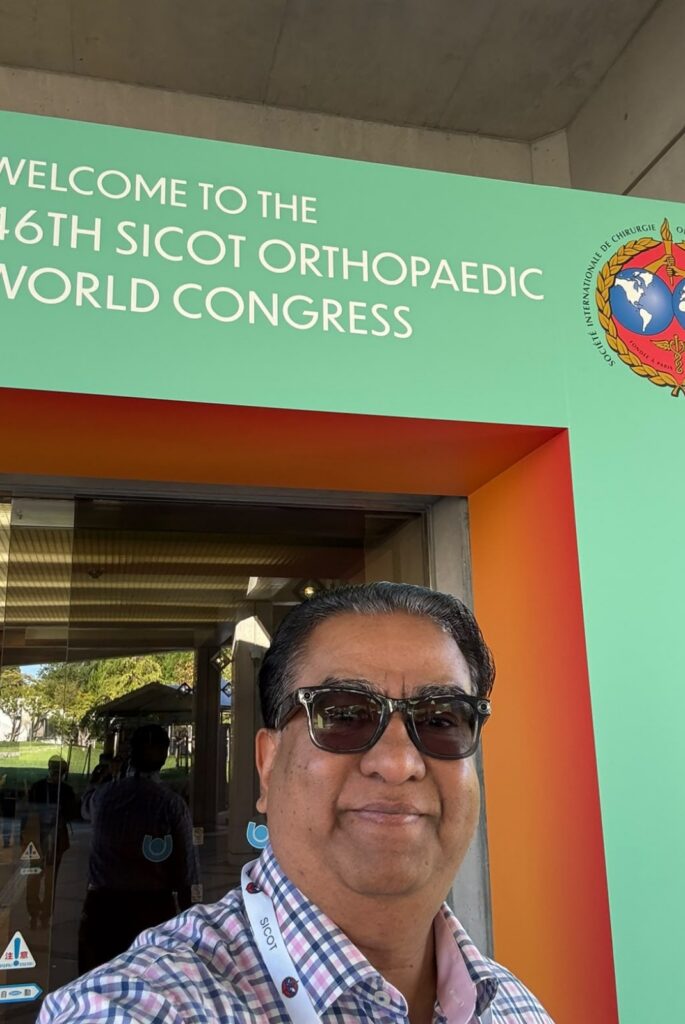
Dr. Michael, an orthopaedic spine surgeon based in Dubai, recently attended the 46th SICOT Orthopaedic World Congress in Kyoto, Japan. The congress took place from 29 September to 1 October 2026 under the theme “A Bridge to the Future”. Surgeons from across the globe gathered to share research and compare techniques.
This article highlights the themes from the congress that matter most to spine patients in Dubai and across the UAE. It also explains how international learning supports safer and more effective care.
What Is SICOT?
SICOT is the International Society of Orthopaedic Surgery and Traumatology. It is one of the oldest orthopaedic societies in the world and its annual congress attracts specialists from many countries.
The Kyoto programme included keynote lectures, interactive symposia, hands on workshops and networking events. Participation in such forums is widely regarded as an important part of continuing professional development. Every session offers a chance to test clinical habits against global evidence. Surgeons return home with fresh ideas, new contacts and a broader view of what is possible.
Why Kyoto Mattered
The organisers described the congress as a meeting point between tradition and innovation. That idea reflects modern spine surgery well. Proven surgical principles are now being combined with new technology to improve care.
Robotics, regenerative medicine, AI driven diagnostics and personalised care were named as central directions for the field. Each of these areas holds promise for people living with spinal conditions. Progress in these areas is being watched closely by surgeons worldwide.
Technology in Spine Surgery
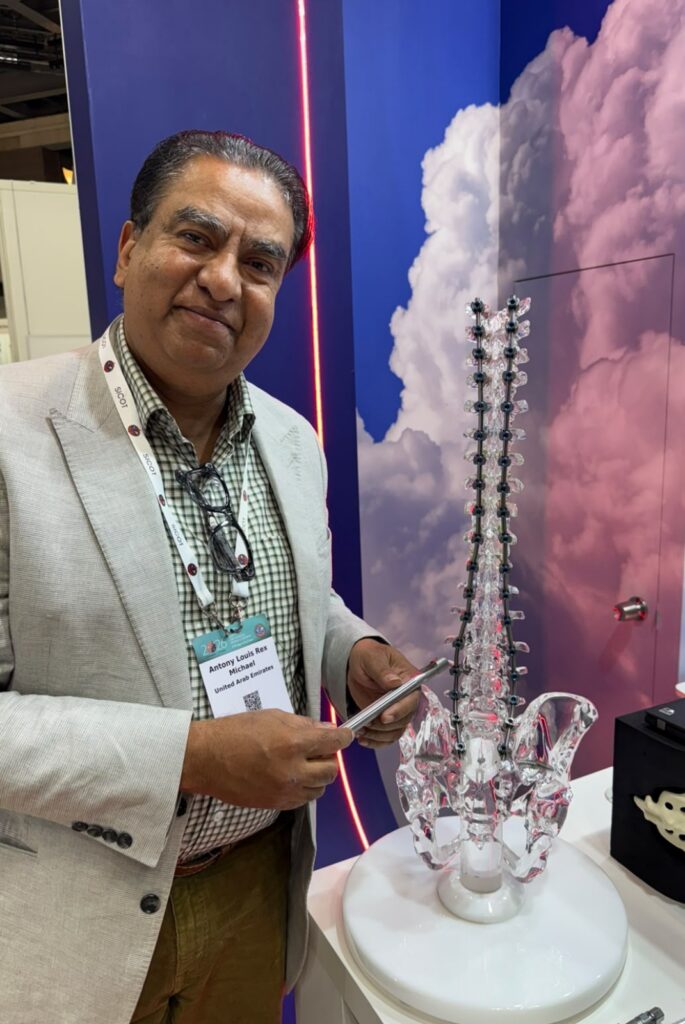
Navigation and robotic assistance are increasingly used to improve the precision of implant placement. When applied appropriately these tools may support safer surgery and more predictable results. Imaging and planning software are also helping surgeons prepare operations in greater detail.
Technology is never a replacement for surgical judgement. Experience, careful planning and sound patient selection remain the foundation of good outcomes. A tool is only as valuable as the clinician using it.
Minimally Invasive Spine Surgery
Minimally invasive techniques continue to attract attention around the world. Smaller incisions are associated with less muscle disruption and in suitable cases a faster recovery. Endoscopic and tubular approaches are examples that are widely discussed in the spine community.
However, not every patient is a candidate for these methods. A thorough assessment is needed to decide whether a minimally invasive operation, a conventional procedure or non surgical care is the best option.
Personalised Patient Care
Spinal problems such as disc herniation, spinal stenosis, scoliosis and degenerative disease affect people in very different ways. Treatment plans are therefore built around symptoms, imaging findings, lifestyle and personal goals. No two spines and no two patients are exactly alike.
Many patients improve with physiotherapy, medication or injections before surgery is considered. Surgery is usually recommended when conservative care has failed or when nerve compression is causing serious symptoms. Honest guidance about all available options is essential.
Collaboration Across Borders
Congresses also create opportunities for collaboration. Surgeons exchange case experiences, discuss complications openly and build professional networks. These networks support second opinions, referrals and shared learning.
Such openness raises the standard of care for everyone. Patients are the ultimate beneficiaries of a medical community that learns together.
Global Knowledge, Local Care
Dubai is a leading medical hub that attracts patients from across the Gulf region and beyond. Surgeons practising here are expected to follow international standards and current evidence. Attending a congress such as SICOT helps bring those standards into everyday clinical practice.
Ideas shared in Kyoto can be carefully reviewed and applied where they benefit patients. Local care is strengthened when it is informed by global experience. Dr. Michael’s attendance reflects a commitment to international academic engagement.
Evidence Before Adoption
Innovation in spine surgery is exciting but it must be approached responsibly. New techniques should be supported by sound research and transparent outcome data. Patients deserve to know both the benefits and the limits of any procedure.
A cautious approach protects patients. It ensures that advances are adopted because they help people and not simply because they are new.
When to See a Specialist
Persistent back pain, leg pain, numbness, weakness or difficulty walking should not be ignored. Symptoms that last more than a few weeks deserve a professional opinion. Sudden loss of bladder or bowel control or severe weakness requires urgent medical attention.
Early assessment by a qualified spine surgeon often leads to clearer options and better planning. An accurate diagnosis is the first step toward recovery.
Looking Ahead
The future of spine care will be shaped by better imaging, smarter planning tools and more personalised treatment pathways. Surgeons who stay connected to the global community are better placed to offer these advances responsibly. Kyoto offered a clear reminder that learning never stops in medicine.
For patients in Dubai this means access to care that reflects worldwide progress. It also means decisions that are guided by evidence, experience and open communication.
Frequently Asked Questions
What is the SICOT Orthopaedic World Congress?
It is the annual international meeting of the Société Internationale de Chirurgie Orthopédique et de Traumatologie. The 2026 edition was held in Kyoto, Japan from 29 September to 1 October.
Why do surgeons attend international conferences?
Conferences allow surgeons to learn about new research and compare techniques with colleagues. This knowledge can then be applied carefully in local clinical practice.
Who should see a spine surgeon in Dubai?
Anyone with persistent back or neck pain or with symptoms such as numbness or weakness should seek an assessment. A specialist can confirm the cause and explain the available treatments.
Book a Consultation
Dr. Michael is an orthopaedic spine surgeon based in Dubai who treats a wide range of spinal conditions. Patients seeking an expert opinion are welcome to book a consultation.
This article is for general information only and does not replace personalised medical advice.