Step 1
Medical History
A full medical history is taken - onset, triggers, progression, and daily impact - before any examination begins.

A different pillow, a new chair, a course of painkillers – most people try everything before seeking answers. When neck pain keeps returning or spreads into the arms, the real cause needs to be found. At Michael Spine Surgeon, it is – and properly addressed.

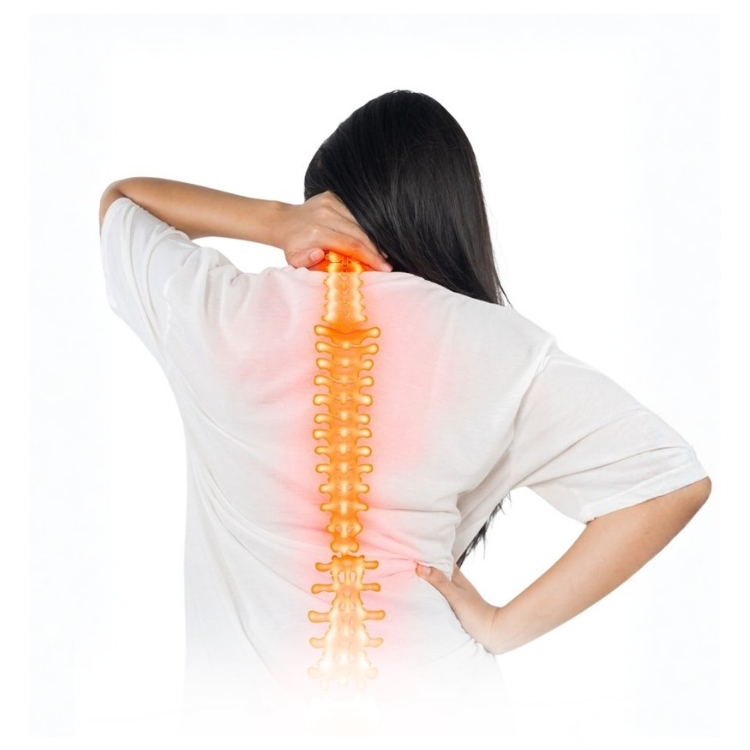
Seven cervical vertebrae, separated by intervertebral discs, support the head and protect the cervical spine. These discs act as shock absorbers – and when one becomes herniated, degenerated, or compressed, the nerve roots passing through can be pinched.
The result is not always localised pain. Radiating pain into the arm, hand weakness, or persistent headaches can all originate from a single affected disc level. The earlier it is investigated, the more options are available.
These symptoms warrant a prompt review by a neck pain specialist in Dubai:
Persistent stiffness and reduced range of motion that does not improve with rest or stretching.
An electric shock-like sensation from the neck into the shoulder or fingers - a hallmark of cervical radiculopathy.
Pins-and-needles or numbness in the hand - caused by nerve root compression in the cervical spine.
Recurring headaches building from the base of the skull - worsened by screens, poor posture, or an unsupportive pillow.
Reduced muscle strength in the hand - pointing to nerve compression at the cervical level.
Loss of balance or coordination - which may indicate pressure on the spinal cord itself, requiring urgent attention.
The soft inner material of a cervical disc ruptures and presses on a nerve root or the spinal cord - the most common driver of cervico-brachial pain and arm symptoms originating in the neck.
Age-related disc degeneration, bone spur formation, and narrowing of the foraminal space - a leading cause of persistent neck pain and stiffness in adults.
Narrowing of the spinal canal compresses the spinal cord and nerve roots - causing pain, upper limb heaviness, and progressive balance and coordination difficulties.
Bad posture, repetitive motions, and prolonged screen use overload the cervical muscles and joints - leading to joint dysfunction, chronic muscle tension, and hard-to-shift neck pain.
A full medical history is taken - onset, triggers, progression, and daily impact - before any examination begins.
Posture, muscle strength, reflexes, and sensation are assessed. Tests identify whether radiculopathy or myelopathy is present.
An X-ray evaluates disc space height, spinal alignment, bone spurs, and degenerative changes.
An MRI provides detailed views of soft tissues, discs, and nerves. A CT scan with 3D image acquisition and spinal neuronavigation is used for complex or surgical cases.
Treatment is matched to the cause, severity, and lifestyle of each patient. Every available option is considered before any recommendation is made.
Anti-inflammatory medication, muscle relaxants, and activity modification allow acute structures to settle - while correcting the poor posture or lifestyle habits driving the problem.
A rehabilitation programme built around neck-strengthening exercises, cervical mobility, and postural correction - targeting the root cause, not just the symptoms.
Cervical spinal injections - including epidural steroid injections and nerve blocks - reduce inflammation and deliver precise pain relief when physiotherapy alone is insufficient.
When conservative treatment fails or spinal cord compression is confirmed, ACDF, cervical disc replacement (arthroplasty), or minimally invasive spinal surgery (MIS) is performed - guided by intraoperative neuromonitoring for maximum safety.
Three years of neck pain, tried everything. Dr. Michael identified a disc problem on the first visit. Within weeks of starting treatment, I was sleeping through the night again.
The tingling in my right hand was getting worse weekly. After my MRI with Dr. Michael, the cause was explained clearly and a plan was in place immediately. Symptoms have almost completely resolved.
I expected to be told I needed surgery. Instead, an injection and physiotherapy were recommended first. Six weeks later, my arm pain had gone - no operation needed.
Back at my desk three weeks after cervical surgery, driving within a month. The recovery guidance was clear and I felt supported throughout. Best decision I made.
Months of headaches I thought were stress. They were coming from my cervical spine. Once treated, they stopped almost entirely. I only wish I had come sooner.
Neck pain left unexplained rarely resolves on its own. A clear diagnosis and a personalised treatment plan are provided from the very first visit.
Sometimes - a herniated disc can reduce in size over time. But recovery is significantly faster and more complete with active conservative treatment through physiotherapy and pain management.
It is the term used when a compressed nerve root causes pain, tingling, numbness, or weakness to radiate from the neck into the arm or hand - distinct from localised neck stiffness and requiring targeted treatment.
When performed with intraoperative neuromonitoring and spinal neuronavigation, cervical spine surgery is a well-established and safe intervention. All risks are discussed in full at consultation before any decision is made.
Patients undergoing physiotherapy or injection therapy maintain normal activity throughout. After minimally invasive cervical surgery, most return to desk work within 2 to 4 weeks and full activity within 6 to 12 weeks.
Previous imaging - X-rays, MRI, or CT scans - and a summary of treatments already tried. If unavailable, it can be arranged through the clinic.